
Van power
Power your van without the guesswork
A fridge that stays cold, a fan on hot nights and a laptop that keeps working. Here's how to size, choose and charge the power setup that gets you there, in the order you'll need it.
Four steps to a working setup
Work out what you use
Add up your fridge, fan, lights, laptop and anything else you plug in. That number, in watt-hours a day, decides everything else.
Use the power calculator →Pick a power station
Match the battery size to your daily use and the output to your biggest appliance. We compare EcoFlow, Jackery and BLUETTI size by size.
Compare power stations →Add solar
Panels keep the battery topped up between drives and campgrounds. Size them to your daily use and the station’s maximum solar input.
Read the solar basics →Buy at the right time
Power stations and panels go on their biggest sales around Black Friday. We wrote down the prices before the sales so you can spot a real deal.
See this year’s deals →
Which size fits?
Capacity is measured in watt-hours (Wh), the size of the tank. Output, in watts, is how much the station can deliver at once, and it has to be higher than your biggest appliance.
| Size | Good for | Models we compare |
|---|---|---|
| About 500 Wh | Weekend trips: phones, laptops, lights, a CPAP for a night or two | EcoFlow RIVER 2 Max 500, Jackery Explorer 500 v2 |
| About 1,000 Wh | Most van lifers: a 12V fridge, lights, a fan and devices through the day, topped up by solar | EcoFlow DELTA 3 Classic, Jackery Explorer 1000 v2, BLUETTI Elite 100 V2 |
| About 2,000 Wh | Full-time living with electric cooking, a coffee maker or power tools | EcoFlow DELTA 3 Max, Jackery HomePower 2000 Plus v2, BLUETTI Elite 200 V2 |
Not sure where you land? The calculator works it out from your own gear, and the EcoFlow vs Jackery comparison has the full specs and current prices for each model.
All our van power guides
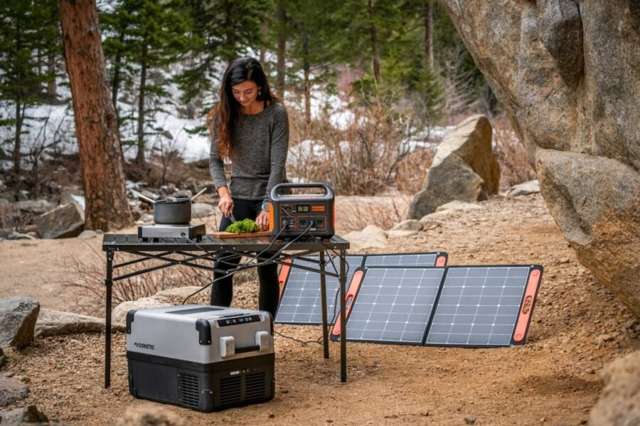
Outdoor Adventures
EcoFlow vs Jackery: Which Power Station Fits Camping and Van Life?
Outdoor Adventures
Black Friday Power Station and Solar Deals 2026: What's Worth Buying
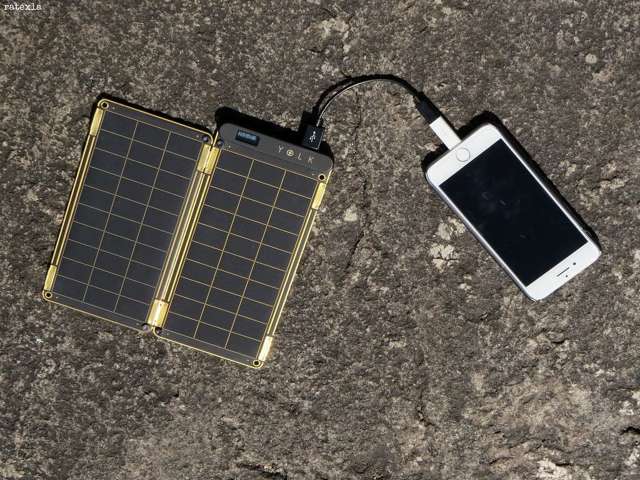
Outdoor Adventures
Best Solar Phone Chargers on Amazon: Which Type Actually Works

Frequently asked questions
Should I get a power station or a built-in lithium system?
A portable power station is the easier start: no wiring, it moves with you, and you can take it out of the van. A built-in system with a separate battery, inverter and charger costs less per watt-hour at larger sizes and can charge from the alternator while you drive, but it takes planning and careful wiring. Many people start with a power station and add a built-in system later.
Can I charge a power station while driving?
Yes. Most power stations charge from a car’s 12V outlet, but that is slow, often around 100W, so a few hours of driving adds a few hundred watt-hours. Some brands sell faster alternator chargers that connect to the van’s battery. Check the station’s listing for its car charging rate.
How long does a power station last?
The models we compare all use LiFePO4 (lithium iron phosphate) batteries, which are rated for thousands of charge cycles, so years of daily use. Keeping them out of extreme heat and not storing them completely empty helps them last.
Specs and prices change often. Check the current listing before you buy. Page last updated November 5, 2026. Read how we choose the gear we compare.