How Much Does Van Life Cost? A Realistic Budget for 2026
This post contains affiliate links. If you buy through them, we may earn a commission at no extra cost to you.

Table of contents
- Upfront costs: buying the van
- New vs used
- Conversion: DIY vs professional
- Monthly costs by category
- Fuel
- Insurance, and the camper van question
- Maintenance and repairs
- Food
- Campgrounds vs free camping
- Phone and internet
- Gym and showers
- Health insurance
- Mail, registration, propane and power
- A hypothetical example budget
- How to cut van life costs
- Van life vs rent
- Frequently asked questions
- How much does van life cost per month?
- Is van life cheaper than paying rent?
- How much does it cost to convert a van?
- Do I need special insurance for a camper van?
- What’s the biggest monthly expense in van life?
Most van life cost guides put one person’s monthly spending somewhere between about $800 and $3,000 once the van is built. The bigger hit comes first: a new empty cargo van starts around $47,000 to $53,000, and a conversion adds anywhere from about $5,000 for a basic DIY build to $100,000 or more for a premium professional one. Where you land depends mostly on how far you drive, how often you pay to camp, and how old your van is.
Upfront costs: buying the van
New vs used
These are 2026 starting prices for three full-size cargo vans commonly used for camper builds:
- Ram ProMaster: from about $47,055, per Kelley Blue Book.
- Ford Transit: from $48,400 for the T-150, plus a $2,395 destination charge, per iSeeCars.
- Mercedes-Benz Sprinter 2500: about $49,000 to $53,000, depending on the source.
Options add up fast: Sportsmobile estimates a 2026 Sprinter 2500 with a high roof, AWD and driver assistance lands around $73,000 before any build work.
Used vans cost less, but prices swing so much with age, mileage and condition that we couldn’t find a reliable national average, and older vans may need more work before a build. On a used diesel, have a mechanic check the emissions system: Sportsmobile warns that replacing a neglected, clogged diesel particulate filter can cost $2,500 to $10,000.
Conversion: DIY vs professional
| Build type | Typical cost (conversion only, van not included) |
|---|---|
| Basic DIY | About $5,000 to $20,000 |
| Professional, mid-range | About $30,000 to $70,000 |
| Premium or turnkey | $100,000 and up |
Those ranges come from The Vansmith, a van builder. Some guides put a bare-bones DIY build as low as $4,000 to $6,000, while Sportsmobile’s published examples list $75,000 to $120,000 for its Sprinter conversions. Many people do the carpentry themselves and hire out electrical or plumbing work.
Monthly costs by category
This table is an estimate for one person in a finished van, built from the sourced figures in the sections below. Swap in your own miles, camping habits and quotes.
| Category | Low | Middle | High | What drives it |
|---|---|---|---|---|
| Fuel (gas van, 15 mpg) | $140 | $285 | $710 | 500 vs 1,000 vs 2,500 miles a month |
| Insurance | $42 | $125 to $335 | $335+ | Recreational vs full-time policy |
| Maintenance and repairs | $55 | $110 | $275+ | Miles driven, van age |
| Groceries | About $250 | About $350 | About $450+ | Diet, eating out |
| Paid camping | $0 | $240 to $440 | $900 to $1,650 | 0 vs 8 vs 30 paid nights |
| Phone and internet | $25 | $75 | $190 | Phone only vs satellite internet |
| Gym and showers | $0 | About $30 | $60+ | Gym membership vs pay-per-shower |
| Health insurance | Varies | $456 | $625+ | Age, state, income, tax credits |
| Mail service | About $13 | About $17 | $17 + postage | Plan level, how much mail you forward |
| Registration | Under $1 | Under $10 | Higher | Your domicile state’s fee rules |
Fuel
Fuel is usually the most flexible line. The EIA’s weekly survey put regular gasoline at about $4.27 a gallon and diesel at about $6.35 in late October 2026, and the EIA’s October outlook expects both to fall next year. A built-out high-roof Transit gets roughly 14 to 18 mpg, according to figures The Vansmith cites from builder OZK Customs, while a diesel Sprinter tends to run from the high teens to the low 20s. Divide monthly miles by your mpg and multiply by the local price: at 15 mpg and $4.27, 1,000 miles costs about $285.
Insurance, and the camper van question
A regular auto policy may not fit a van you live in. Bearfoot Theory reports that Progressive won’t offer standard auto coverage for a van used as a camper, and a standard policy may not cover your build or belongings. The usual alternative is an RV (Class B) policy, and insurers that cover DIY builds, such as Roamly, want the conversion documented. Roamly’s guide puts Class B coverage at about $500 to $1,500 a year for recreational use and $1,500 to $4,000 or more a year for full-time use, which is where the table’s numbers come from. If the van is your home, say so when you get quotes and ask about full-timer liability, which Progressive offers for people who use an RV as a permanent residence.
Maintenance and repairs
AAA’s 2025 “Your Driving Costs” study puts maintenance, repairs and tires at an average of 11.04 cents per mile. That figure assumes a new vehicle over five years, so an older, high-mileage van will likely cost more. Set money aside monthly even when nothing breaks.
Food
USDA publishes monthly food plans at four levels, from thrifty to liberal. Summaries of the 2026 reports put one adult aged 19 to 50 at roughly $250 a month on the thrifty plan and about $450 or more on the liberal plan, though the exact figure varies by age, sex and month. Eating out costs extra.
Campgrounds vs free camping
On most Bureau of Land Management land, you can camp free for up to 14 days within any 28-day period, though local limits vary. BLM’s Long Term Visitor Areas in the Southwest sell a season permit; the last confirmed fees were $180 for the season or $40 for 14 days, and a 2024 BLM draft plan proposed raising them, so check current rates. A 2025 Harvest Hosts breakdown lists $30 to $55 a night for basic sites with water and electric, $50 to $90 for full hookups, and $90 to $150 or more for premium parks.
Phone and internet
Prepaid unlimited phone plans from Visible and US Mobile start at $25 a month with taxes included. For remote work, Starlink’s Roam plans run $50 a month for 100GB, $80 for 300GB, and $165 for unlimited data, with the hardware bought separately.
Gym and showers
A Planet Fitness Black Card starts at $24.99 a month plus an annual fee, and the company has announced plans to raise it to $29.99. Truck stop showers without a fuel purchase cost roughly $12 to $17 each, depending on the chain.
Health insurance
This can be your largest bill. KFF reports that in 2026, a 40-year-old paid an average of $456 a month for the cheapest Bronze marketplace plan and $625 for the benchmark Silver plan before tax credits. The Silver average ranged from $401 in New Hampshire to $1,299 in Vermont. Check whether a plan’s network works where you travel.
Mail, registration, propane and power
Escapees Mail Service charges $110 to $150 a year, plus a $49.95 yearly Escapees membership and postage. Registration depends on the state you claim as your legal home: some states charge a flat fee (Arizona’s starts at $8 a year), while others base it on weight or value (Virginia runs about $30.75 to $116.49). Propane use depends on whether you cook and heat with it; the EIA’s residential propane price averaged about $2.55 a gallon last winter, though small-tank refill prices vary by retailer.
A hypothetical example budget
This is a hypothetical illustration built from the ranges above, not a real person’s spending. It assumes one person, a gas van at 15 mpg, 1,000 miles a month, eight paid nights at $40, and self-purchased health insurance at the Bronze average.
| Item | Monthly |
|---|---|
| Fuel | $285 |
| Full-time insurance (low end) | $125 |
| Maintenance fund (11.04 cents x 1,000 miles) | $110 |
| Groceries | $350 |
| Paid camping (8 nights x $40) | $320 |
| Phone ($25) plus Starlink Roam 100GB ($50) | $75 |
| Gym membership | $30 |
| Health insurance | $456 |
| Mail service and membership | $20 |
| Registration | $10 |
| Total | $1,781 |
Drop the health insurance line (if you’re covered another way) and the total falls to about $1,325. Double the miles and pay for every night, and it can pass $3,000.
How to cut van life costs
- Camp free on public land. Our beginner’s guide to boondocking and dispersed camping guide cover how to find legal free sites on BLM and national forest land. Swapping eight paid nights for free ones saves $240 to $440 a month at the rates above.
- Use Harvest Hosts for paid-area stays. A Classic membership costs $99 a year and gets you overnight stays at wineries, farms and similar small businesses, as long as your rig is self-contained. At $30 to $55 a night for a basic campground, it can pay for itself in two to four nights. Read our Harvest Hosts review or join Harvest Hosts here.
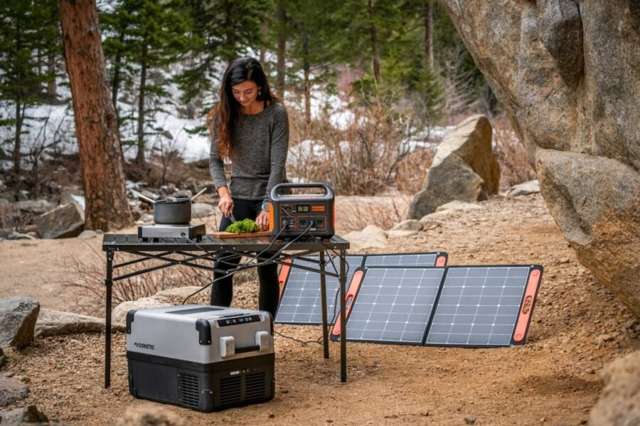
- Add solar and a power station. The more power you make yourself, the less you need paid electric hookups. Our EcoFlow vs Jackery comparison covers the main options.
- Drive less and cook more. Fuel and wear both scale with miles, so staying put for a week cuts two budget lines at once. Cooking in the van costs less than eating out.
Van life vs rent
The U.S. Census Bureau’s 2024 American Community Survey put the national median gross rent at $1,487 a month, which includes utilities. A frugal van budget can come in below that, but van life spending also covers fuel, vehicle insurance and repairs, and you’ll likely pay tens of thousands of dollars up front for the van and build. Over years it can save money; over a few months, it often doesn’t.
Frequently asked questions
How much does van life cost per month?
Most guides put it between about $800 and $3,000 a month for one person, after the van is built. The low end assumes little driving and free camping; the high end assumes heavy driving, frequent paid campgrounds and buying your own health coverage.
Is van life cheaper than paying rent?
It can be, month to month. The 2024 U.S. median gross rent was $1,487, and a careful van budget can come in under that. But you also have to count the van and conversion, and a new van plus even a basic DIY build starts above $50,000.
How much does it cost to convert a van?
A basic DIY conversion typically costs about $5,000 to $20,000 in materials, not counting the van. Professional mid-range builds run about $30,000 to $70,000, and premium builds start around $100,000.
Do I need special insurance for a camper van?
Often, yes. A standard auto policy may not cover a van used as a camper or the build inside it, so the usual route is an RV (Class B) policy. If you live in the van full-time, tell the insurer and ask about full-timer coverage.
What’s the biggest monthly expense in van life?
In our estimate, fuel and paid camping swing the most with travel style. Self-bought health insurance can top both: $456 to $625 a month on average for a 40-year-old in 2026, before tax credits.
Prices, fees and plan details change often, so check current rates with each provider before you budget.