Harvest Hosts Review: Is the Membership Worth It for Van Life?
This post contains affiliate links. If you buy through them, we may earn a commission at no extra cost to you.
Table of contents
- The short answer
- What Harvest Hosts costs in 2026
- How a Harvest Hosts stay works
- The rules that matter most
- Your rig has to be self-contained
- Stays are usually one night
- Every host sets its own rules
- What Boondockers Welcome adds
- Who Harvest Hosts is best for
- Harvest Hosts vs. free camping
- Tips for your first stays
- Frequently asked questions
- Is Harvest Hosts worth it?
- How much does Harvest Hosts cost?
- Can you use Harvest Hosts in a van?
- How long can you stay at a Harvest Hosts location?
- Do you have to buy something at Harvest Hosts?
Harvest Hosts is a yearly membership that lets you park overnight at wineries, farms, breweries, museums and other small businesses across North America, with no nightly camping fee. You request a stay in the app, show up during the host’s arrival window, and support the business by buying something while you’re there.
For the right traveler it’s one of the best values in RV and van life. For others, one rule in particular rules it out. This review covers what it costs, how stays actually work, and how to tell which group you’re in.
How we wrote this: this review is based on Harvest Hosts’ published plans, rules and support articles, checked in November 2026, plus reports from members. We haven’t been paid for a positive review, but we do earn a commission if you join through our links.
The short answer
- Worth it if you travel often, your rig is self-contained (an indoor toilet and an indoor kitchen), and you like quiet, unusual overnight spots more than full-hookup campgrounds.
- Skip it if your van has no indoor toilet, you mostly stay put for weeks at a time, or you only take a trip or two a year.
- The math: the Classic plan costs $99 a year at list price. If it replaces even a few paid campground nights, it pays for itself, before counting the wine, cheese or produce you’d likely buy anyway.
What Harvest Hosts costs in 2026
Harvest Hosts sells three plans. These are the yearly list prices; the company often runs discounts, so check the live price when you sign up.
| Plan | List price per year | What you get |
|---|---|---|
| Classic | $99 | Small-business hosts: wineries, farms, breweries, distilleries, museums and other attractions, plus discounts at partner campgrounds |
| Classic + Boondockers Welcome | $169 | Everything in Classic, plus Boondockers Welcome: stays on private property hosted by other RVers |
| All Access | $179 | Everything above, plus golf course hosts and an Escapees RV Club membership |
Harvest Hosts’ own 2026 guide lists more than 5,900 locations on the Classic plan and roughly 9,700 across everything in All Access. Counts move around as hosts join and leave, and different sources report different totals, so treat these as ballpark figures.
Discount: new members who join through our Harvest Hosts link can get 20% off the first year. If the discount doesn’t show at checkout, use the code ADVANTURE20.
How a Harvest Hosts stay works
- Find a host in the app or on the website. Each listing includes the host’s arrival window, parking instructions, business hours and its own rules, such as whether generators, slide-outs or pets are allowed.
- Request your stay ahead of time through the app. Popular hosts can fill up on weekends and in peak season, so don’t leave it to the last minute.
- Arrive during the arrival window and park where the host’s instructions say. Some hosts want you to check in at the shop or tasting room first.
- Support the host. Buy a bottle, some produce, a meal or a tour. Harvest Hosts says purchases can’t be required, but it encourages members to spend around $30, and that spending is the reason hosts take part.
- Leave by the departure time and leave the spot exactly as you found it.
The rules that matter most
Your rig has to be self-contained
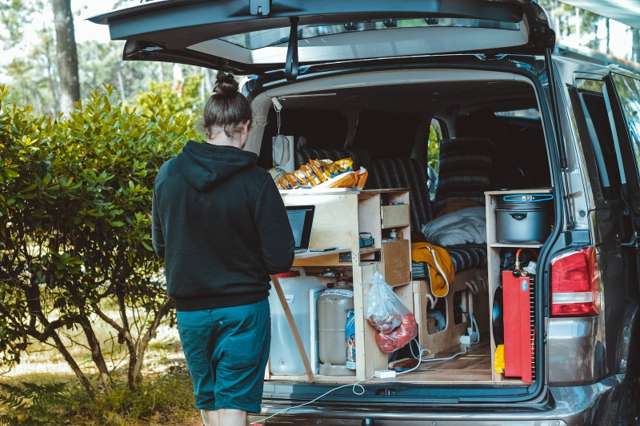
This is the big one for van lifers. Harvest Hosts requires members to travel in a self-contained vehicle, meaning it has an indoor toilet and an indoor cooking setup. Hosts aren’t campgrounds: there are no restrooms or water provided for you, and tents aren’t allowed.
Many camper vans qualify, especially ones with a cassette or composting toilet. A van with only a bed and a camp stove doesn’t. If you’re still planning your build, this is a good reason to include a toilet.
Stays are usually one night
The default is a single night. Some hosts allow longer stays, sometimes for a fee, and their listing will say so. Harvest Hosts works best as a series of travel-day stops, not as a place to settle in for a week. For longer free stays, our boondocking guide covers public land where you can usually stay up to 14 days.
Every host sets its own rules
Generators, slide-outs, pets, quiet hours and where to park all vary by host. Read the listing before you request a stay, and follow it to the letter. Hosts can and do leave the program over bad guest behavior, which makes the network worse for everyone.
What Boondockers Welcome adds
Boondockers Welcome is a separate network, now owned by Harvest Hosts, where private property owners, often fellow RVers, offer a parking spot on their land. It’s a different feel from a winery or a farm: you’re staying with a person, not a business, so there’s no shop to buy from.
It’s worth the upgrade if you travel through areas with few small-business hosts, or if you’d like the option of a friendly local’s driveway. If you mainly want the winery and farm stays, Classic is enough.
Who Harvest Hosts is best for
- Travelers covering long distances. It turns travel days into something to look forward to instead of a truck stop or a big-box parking lot.
- People who like local food and drink. The purchases are part of the fun, not a tax.
- Anyone uneasy about stealth or street camping. You always have permission to be there, and you’re usually somewhere quiet.
It’s a weaker fit if you mostly use free public land, rarely move, or need hookups every night.
Harvest Hosts vs. free camping
Free dispersed camping on BLM and national forest land costs nothing and often allows two-week stays. Harvest Hosts costs a yearly fee plus whatever you buy, and stays are short. The two work best together: public land when you want to stay a while, Harvest Hosts on the days in between, especially in farm country and wine regions where public land is scarce.
Tips for your first stays
- Check the parking details before you fall in love with a host. Some spots suit only smaller rigs, which works in a van’s favor.
- Request early for weekends and popular regions.
- Arrive during business hours if you plan to shop, and say thanks when you leave.
- Keep your setup small. No chairs and grills spread across the lawn unless the host says it’s fine.
- Leave a review. It helps other members and lets good hosts know they’re appreciated.
Frequently asked questions
Is Harvest Hosts worth it?
For most people who travel regularly in a self-contained rig, yes. At $99 a year for the Classic plan, it pays for itself if it replaces a few paid campground nights, and the stays are often more memorable than a campground. If you rarely travel or your van has no indoor toilet, it’s not a good fit.
How much does Harvest Hosts cost?
List prices are $99 a year for Classic, $169 for Classic plus Boondockers Welcome, and $179 for All Access. Harvest Hosts often runs discounts, and new members can get 20% off the first year through our link or with the code ADVANTURE20.
Can you use Harvest Hosts in a van?
Yes, if your van is self-contained, meaning it has an indoor toilet and an indoor cooking setup. Vans without a toilet don’t qualify, and tents aren’t allowed.
How long can you stay at a Harvest Hosts location?
Usually one night. Some hosts allow extra nights, sometimes for a fee, and say so in their listing.
Do you have to buy something at Harvest Hosts?
Purchases can’t be required, but they’re strongly encouraged. Harvest Hosts suggests spending around $30 per stay, and supporting the host is the whole idea behind the program.
Plans, prices and host counts change. Check the current details on Harvest Hosts before you join.